Behind the Glass: The Strange Afterlives of 92 Squadron's Surviving Artefacts
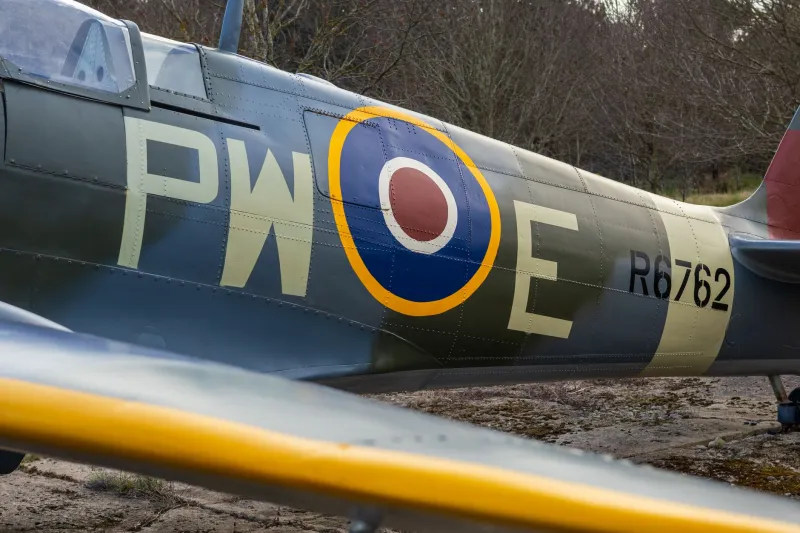
Museums are where objects go to be remembered, but they are rarely where objects begin. The surviving material culture of 92 Squadron — the badges, logbooks, playing cards and pieces of airframe associated with the celebrated 'Gambler Boys' — has travelled crooked, improbable paths since 1945. Some items sit in national institutions under controlled humidity. Others rest in county museums staffed by volunteers. A troubling number, we must assume, lie unlabelled in lofts and sideboards across Britain.
From Dispersal to Display
When a squadron disbanded or re-equipped, its possessions did not follow any tidy protocol. Personal effects returned to families; squadron property was requisitioned, scrapped or simply abandoned. What we now call 'memorabilia' was, in the moment, someone's working kit or a keepsake tucked into a tunic pocket.
The ace of spades motif that became the squadron's visual signature survives in several forms. Painted examples on salvaged airframe panels are the rarest and most evocative — these were never issued, never catalogued, and never meant to outlast the aeroplanes they adorned. That any survive is down to ground crew who, in defiance of salvage orders, cut away a section of fuselage before the rest went to the smelter.
The National Collections
The Imperial War Museum holds a broad portfolio of RAF material from the Battle of Britain period, and items associated with 92 Squadron's pilots appear within it — photographs, uniforms and documents gathered through official transfer and, just as often, through the quiet generosity of families decades later. Such institutions operate on the principle of provenance: an object's value lies not merely in what it is, but in the documented chain of custody behind it.
This is where many private collections fall short. A logbook without its pilot's name, a badge torn from a tunic without a donor's note — these become orphans, technically authentic but historically mute. Curators at the IWM and at smaller regional repositories spend a remarkable share of their time reconstructing exactly these chains, letter by letter and descendant by descendant.
The County Museums and the Volunteers
Beyond London, the picture becomes more human. Small museums in Lincolnshire and Kent — counties that hosted the squadron at various points in its wartime peregrinations — hold material that no national body would prioritise: mess dinner menus, a hand-dealt deck of cards said to have belonged to a flight sergeant, correspondence between the squadron and a village vicar.
The custodians of these collections are rarely professional curators. They are retirees, local historians and enthusiasts who catalogue on Saturdays and worry, quite legitimately, about conservation standards. Their knowledge is often deep but undocumented — a volunteer may know precisely which pilot donated an item, yet that knowledge exists only in conversation. When the volunteer moves on, the connection is severed.
What Has Vanished
Honest accounting requires admitting how much is gone. Wartime paper rots. Fabric moths devour. Metal was melted in the great post-war scrap drives, when patriotism demanded that Spitfire panels become saucepans. And theft, though rarely discussed in polite heritage circles, has taken its toll — service medals in particular are regularly offered at auction with no lawful explanation of how they left their families.
The Medal Office and organisations such as the Medals Reunited initiatives have done good work restoring stolen or lost decorations to next of kin. But for every medal recovered, others circulate anonymously, their stories erased by the very market that prizes them.
An Appeal to Our Readers
If this publication exists for one purpose beyond commemoration, it is this: the record of 92 Squadron is not yet complete, and the missing pages may be in your house.
We would ask readers to look — properly look — at what their grandparents kept. A bundle of letters, a photograph with names pencilled on the reverse, a playing card preserved between the pages of a Bible. Any of these could fill a gap in the squadron's story that no archive can bridge.
Should you find something, resist the urge to clean it, and equally the urge to sell it. Contact a regimental or squadron association, a county record office, or the heritage team at a museum with RAF holdings. Documentation can be established; provenance can be rebuilt. But only if the object survives long enough to be found.
The Gambler Boys played the hands they were dealt. The least we can do, eighty years on, is make sure the deck is not scattered for good.