One Chalk Mark at Midnight: The WAAF Clerk Who Kept 92 Squadron's Dawn Honest
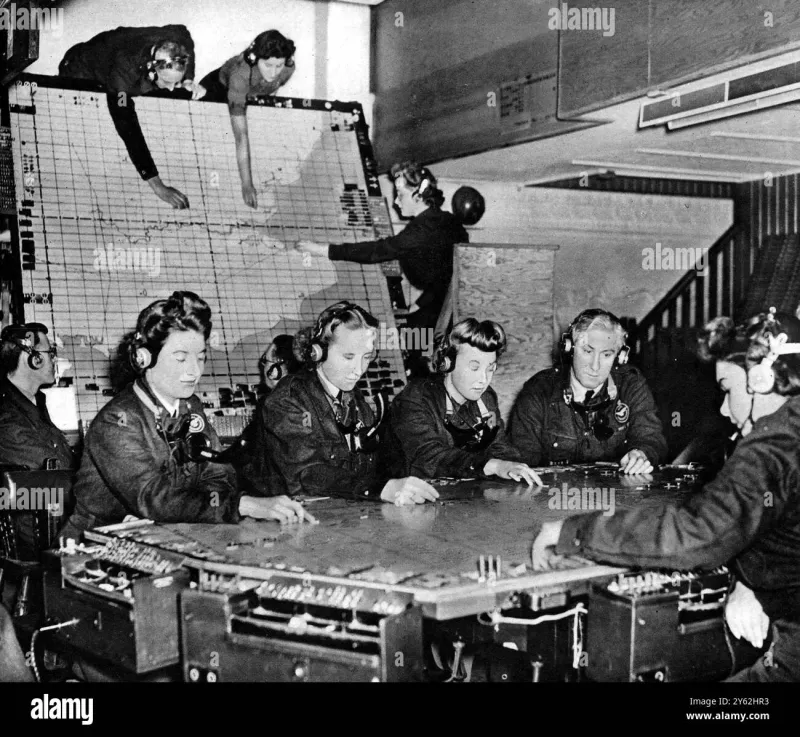
Photo: WAAF women RAF operations room plotting board World War Two Britain, via c8.alamy.com
The Board That Ran the Battle
Visitors to the preserved operations rooms scattered across Kent's former fighter airfields often remark on the same detail: the boards are so small. In the popular imagination, the Battle of Britain was won in the sky, by young men in Spitfires and Hurricanes. In truth, it was coordinated from cramped huts and plotting rooms, where the fate of a squadron could rest on a piece of chalk, a telephone line and the judgement of a nineteen-year-old in a WRNS-blue or RAF-blue skirt.
At Biggin Hill, the station through which 92 Squadron fought the most punishing months of 1940, the operations board was the beating heart of the airfield. Every aircraft's serviceability, every crew's readiness, every plotted raid and every change of state — from 'standby' to 'scramble' — passed across it. And on the night shift, when the senior duty clerks had gone to their billets and the station slept in fits and starts, the board was often in the hands of the youngest women on the camp.
This is the story of one such night, reconstructed from squadron records, station diaries and the fragmentary recollections that survive. Names in some cases have been drawn from the wider record rather than confirmed individual files; where the archive is silent, we have said so plainly. What follows is a careful reconstruction, not a work of fiction.
A Winter Night at Biggin Hill
By late autumn 1940, the daylight assault on Biggin Hill had eased, but the station's ordeal had not ended. Night raids were frequent, the perimeter was scarred with bomb craters, and the constant drain on communications lines meant the operations room relied on a patchwork of telephone exchanges, runners and, when the wires failed, nothing at all.
92 Squadron had by this stage moved through the maelstrom of the Battle of Britain with a reputation for aggressive flying and, famously, for the card-playing bravado that earned its pilots the 'Gambler Boys' nickname. But the squadron's luck at the board — the administrative board, not the card table — depended on people the pilots rarely saw. Among them were the Women's Auxiliary Air Force plotters and clerks who kept the picture current through the small hours.
The night in question was cold enough for condensation to form on the hut windows and for the paraffin stoves to be fought over. A raid was tracked crossing the Channel shortly after midnight; the telephone lines to the sector station dropped more than once; and a relief plotter arriving on duty found the room lit by shaded lamps and thick with cigarette smoke.
The Error That Waited for Dawn
The detail at the centre of this account is deceptively dull: a serviceability entry. Somewhere in the churn of that night — between updated raid plots, a line failure and a changeover of duty clerks — an aircraft state was recorded incorrectly on the squadron's board. The machine in question, according to the surviving station paperwork, was logged as ready for the dawn standby when its true status was otherwise.
Had the error stood, the dawn section would have been detailed one aircraft short at the moment of greatest vulnerability: first light, when Luftwaffe reconnaissance Junkers 88s and Messerschmitt 110s of the fighter-bomber units traditionally probed the Kentish coast. A scramble with a gap in the section, or a pilot strapping into an unserviceable aircraft, was not a hypothetical danger. Both had happened to squadrons in 11 Group.
The correction, when it came, came from cross-checking. The young WAAF on duty — working from the engineering officer's returns and the ground crew's night repair chits — noticed the discrepancy between what the board claimed and what the dispersal paperwork showed. She queried it up the chain, the board was amended, and the dawn state was corrected before the controllers committed to it.
It is worth being honest about what the record can and cannot tell us. There is no dramatic minute of commendation for that specific night in the squadron archive, no photograph of the moment. What survives is the pattern: station records showing the correction was made, and the recollections of WAAF veterans, recorded decades later, describing precisely this kind of vigilance as routine. Routine, in the operations room, was the point. The system worked because someone always checked.
The Women Behind the Chalk
The contribution of the WAAF at Biggin Hill has often been reduced to a single statistic — the sixteen women killed when the WAAF site was bombed in August 1940, the first British servicewomen killed by enemy action in the war. Their memorial stands to this day. But between the raids, hundreds of women did the unglamorous work of keeping the airfield's paperwork, plots and telephone lines alive.
For a clerk or plotter, the responsibility was real and immediate. A wrong height on a plot could misroute a section of fighters. A wrong serviceability state could send a pilot to a dead aircraft. The work demanded the same qualities as the flying it supported: accuracy under pressure, stamina and the ability to keep one's head while the hut trembled with nearby detonations.
Veterans of these rooms interviewed after the war spoke of the peculiar intimacy of the work. They knew which pilots were on readiness, which were resting, which had been on the telephone to a wife in London. When a section failed to return, the board was the first place the loss registered — in silence, in chalk, before the signals arrived.
Why This Story Matters
The 'Gambler Boys' identity of 92 Squadron speaks to chance: the dice, the dealt hand, the odds of survival. But the story of the operations board suggests something subtler. The squadron's luck was not merely gambled with in the mess; it was manufactured, hour by hour, by people whose names rarely appear in the squadron histories. Every scramble that went smoothly was the product of a hundred small corrections nobody ever heard about.
Heritage is often told through the airframes and the aces, and rightly so. But a full account of 92 Squadron's war must include the WAAF hut at midnight, the cross-checked chit, the amended chalk mark. The dawn section that rose cleanly over Kent owed its shape to a young woman whose name the archive has, for the most part, let slip.
If readers hold family papers, WAAF service records or station photographs from Biggin Hill in this period, we would be glad to hear from them. The board was only ever as good as the people behind it, and their story deserves every entry it can get.