Lucky in the Face of Odds: The Charms, Rituals and Quiet Faith of 92 Squadron's Airmen
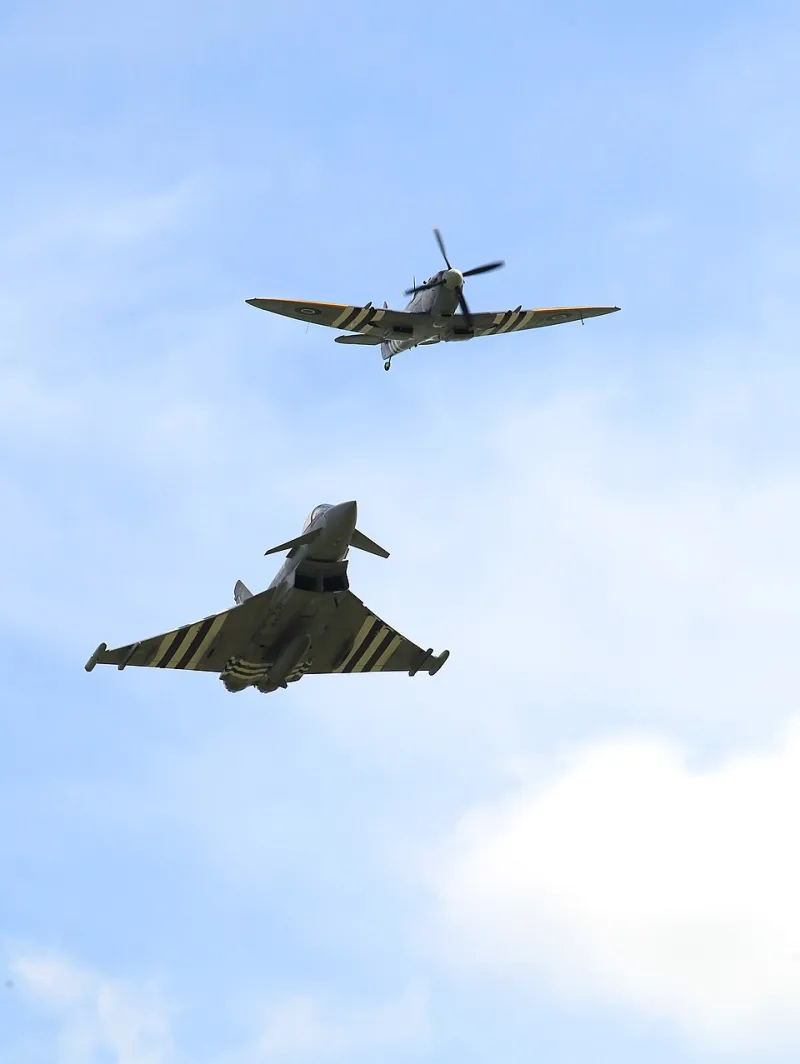
Photo: Senior Aircraftman Angel Clarke, OGL v1.0, via Wikimedia Commons
Walk past the dispersal huts of any wartime fighter station and you would have noticed small things. A photograph of a fiancée sellotaped to the instrument panel. A half-crown coin polished smooth by nervous thumbs. A playing card, often the ace of spades, tucked behind a mirror or painted cheekily beneath a squadron's code letters. For the men of 92 Squadron — the 'Gambler Boys', whose card-game iconography became the stuff of legend at Biggin Hill and Digby — these were not decorations. They were armour of a different kind.
The Ace of Spades Takes Flight
The squadron's association with gambling imagery began, as most good stories do, somewhere between boredom and bravado. Off-duty hours at Digby and later Biggin Hill were filled with poker and pontoon, and the card motif migrated naturally onto the aircraft themselves. The ace of spades — the highest, most feared card in the pack — became shorthand for a squadron that played for keeps.
But the emblem carried more weight than mere swagger. In a war where a pilot's odds of surviving a full tour were, by some veterans' own arithmetic, little better than a coin toss, the language of chance was not a joke. It was the most honest vocabulary available. Pilots did not speak of dying; they spoke of 'buying it', of 'chopping' a sortie, of the 'pub without a bar' — the fatalistic slang of men who understood the game was rigged but played anyway.
What the Airmen Carried
Veterans' accounts, gathered in letters home and post-war reunions, reveal a remarkable consistency in what airmen considered lucky. Photographs of loved ones were near-universal. Coins, particularly those found in unusual circumstances — a lucky penny picked up on the way to a scramble that ended safely — acquired totemic status. Some men refused to fly without a particular scarf, a particular pair of gloves, a particular ritual of touching the cockpit rim twice before closing the hood.
Squadron mascots followed a similar logic. Dogs were the most common — and the most cherished, their presence in the crew room a small daily reassurance that some things stayed constant. A goat, a gosling, even a stolen pub sign: whatever stood watch over the dispersal became part of the squadron's collective insurance policy against the sky.
The Psychology of the Charm
Modern psychology offers a respectful explanation for what the veterans knew instinctively. Researchers have long noted that superstition flourishes precisely where skill, effort and preparation meet outcomes they cannot fully control. A pilot could check his engine, study his maps and drill his deflection shooting — but no amount of competence could guarantee that the Messerschmitt came out of the sun behind him or not.
Rituals and charms, studies of athletes, soldiers and surgeons suggest, reduce anxiety and sharpen focus by creating a sense of influence over the uncontrollable. The pilot who touched the ace of spades before take-off was not being irrational. He was managing fear in the only currency available, buying a few moments of calm in which his training could do its work. In this light, the 'Gambler Boys' iconography looks less like fatalism and more like a sophisticated coping mechanism — a way of domesticating chance without pretending to defeat it.
There was, too, the communal dimension. A squadron's shared rituals bound twelve men into a single fighting unit. When everyone honoured the same lucky routine, everyone signalled the same understanding: we are afraid together, and together we go anyway.
Why the Symbol Endures
The ace of spades has never quite left RAF culture. It appears on squadron patches, on the tails of heritage flight aircraft, and on the memorabilia collected by enthusiasts across Britain. At reunions and airshows from Kent to Lincolnshire, the card remains an instantly recognisable shorthand for a particular breed of courage — one that acknowledged the odds and flew regardless.
For the heritage traveller visiting Biggin Hill's chapel or the quiet airfields of the squadron's story, the motif rewards a second look. It is not merely a joke painted by young men with too much paint and too little fear. It is a document of belief: evidence of how ordinary Britons — mill boys, miners' sons, clerks and card sharks alike — steeled themselves for the impossible.
The next time you see that spade on a fuselage, consider what it really represented. Not a guarantee of survival. Not a denial of death. Simply a hand of cards dealt to young men who had no choice but to play — and who chose, every morning, to play them well.