The Airframe That Refused to Retire: Following One 92 Squadron Spitfire Through the Repair Shops
Squadron histories tend to be written in men's names. Yet the 92 Squadron story is equally legible in aluminium and doped fabric — in the serial numbers that moved through the squadron's establishment during 1940 and 1941, each one a small biography of manufacture, damage and repair.
Weybridge, Castle Bromwich and the Birth of an Airframe
The Spitfires that equipped 92 Squadron in its early Spitfire Mk I days came from the Vickers Supermarine production network, with airframes flowing through storage units before allocation to frontline squadrons. From June 1940, as losses mounted with alarming speed, the Castle Bromwich works near Birmingham became the lifeline — its Mk IIs, and later the Mk Vb with its twin cannon, replacing machines that often lasted barely weeks in squadron service.
For the ground crews at Croydon, Biggin Hill and the squadron's later bases, each new arrival was inspected with a craftsman's scepticism. A fresh airframe was not a finished thing; it was raw material awaiting the squadron's particular fingerprint — the code letters, the port and starboard roundels freshly outlined, the gun harmonisation checked against the range at Lydd.
Reading the Form 1180s
The RAF's paperwork, unglamorous as it is, allows us to follow individual machines with remarkable intimacy. An Accident Card or a Form 1180 — the record of damage — tells its own terse story: 'Cat. A. Landing. Undercarriage collapsed. Repaired on site.' Or, more ominously, 'Cat. B. Battle damage. To repair unit.'
One typical airframe allocated to the squadron in the summer of 1940 might, within four months, carry a Category A record for a forced landing after combat over the Channel, a Category B after cannon shell fragments through the wing spar during a Biggin Hill scramble, and a new engine following a coolant leak that nearly ended its pilot over Kent. Each category mattered: Cat. A meant repair by squadron fitters; Cat. B meant a journey by road to a Civilian Repair Organisation depot — often a shadow factory or a bus works requisitioned for the purpose; Cat. C usually meant the airframe would never fly again.
Many Hands, Many Sorties
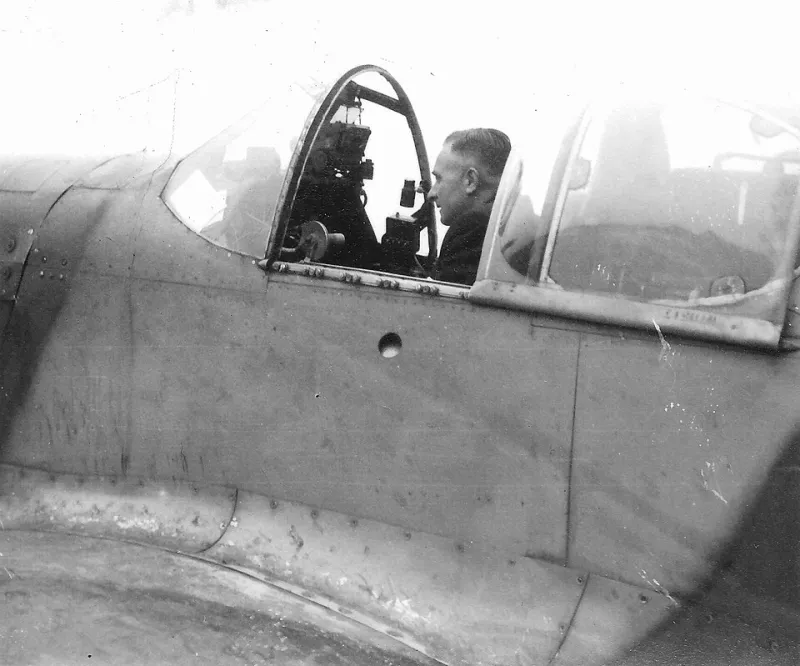
What emerges from the records is the sheer transience of it all. A pilot might fly a Spitfire for a fortnight before being posted, shot down or rested; the airframe remained. Fitters and riggers — many of them barely out of their apprenticeships — came to know individual machines the way a family doctor knows a patient: which engine burned oil, which gun tended to freeze above 20,000 feet, which aileron had never sat quite true since the CRO rebuild.
Veterans of the squadron recalled machines by their last three letters rather than by any affection for the abstract. 'That old girl got me home twice,' was a sentiment recorded more than once in memoirs and letters — gratitude directed not at the squadron, nor the RAF, but at one patched, hammer-hardened airframe.
Why It Matters Today
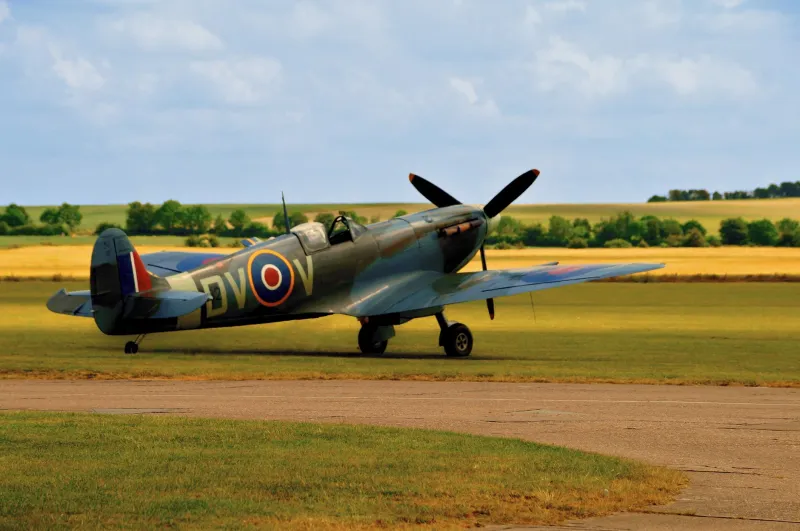
For the heritage visitor, this changes how we should look at restored Spitfires at Duxford or Hendon. Every panel, every over-sized rivet head, may conceal a repair made at speed by men working by lamplight under canvas. The Gambler legend belongs to the pilots; the endurance of the squadron belonged equally to the machines and to those who kept them airborne against all arithmetic.