Cut! The Cameras Never Came to Biggin Hill: Separating 92 Squadron Fact from Screen Fiction
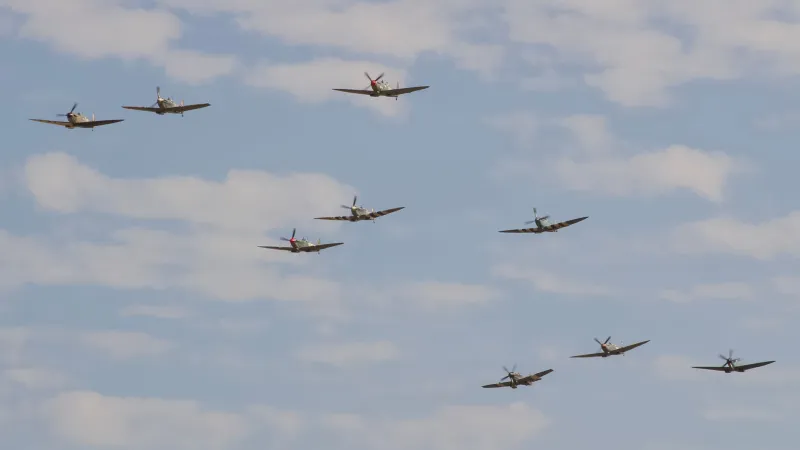
Few institutions have been put before the cameras quite like RAF Fighter Command. From the moment Guy Gibson's raiders found their way into the picture houses to the restorations and digital dogfights of recent decades, the men of the wartime RAF have been endlessly re-fought on film. Yet for all that screen time, the squadrons themselves are often invented wholesale — and the real record, including that of 92 Squadron, is quietly left at the studio gate.
A Squadron Built for the Movies, But Never Cast
There is something almost cinematic about 92 Squadron's story. The 'Gambler Boys', named for the playing-card motif that graced their Spitfires — the Ace of Spades, adopted as the squadron's emblem — carried an identity tailor-made for drama. Their record through the Battle of Britain, their service over North Africa and their later Spitfire operations gave them arcs, losses and triumphs that any screenwriter might envy.
And yet, curiously, 92 Squadron was never the subject of a major screen production. The famous portrayals of Fighter Command — the 1969 epic Battle of Britain chief among them — drew on composite squadrons and fictional units, folding real histories into an ensemble narrative. Historians have long noted that individual squadron identities were blurred deliberately, partly for dramatic economy and partly to avoid offending any unit whose story was trimmed in the telling.
The 1969 Problem: Spectacle Over Specificity
Battle of Britain remains the touchstone. Its aerial sequences, shot with genuine Spitfires and Hurricanes and filmed with an attention to period hardware that has never been equalled, remain a benchmark. But the film's approach to squadron culture was broad-strokes: the pilots are interchangeable toffs and plucky sorts, the ground crews background furniture, and the emotional register one of breezy stoicism.
For those who study 92 Squadron's documented record, the omissions are telling. The squadron's operational reality — the strain of repeated scrambling from Biggin Hill during the summer of 1940, the rotation of exhausted pilots, the meticulous intelligence work behind each interception — is absent from the film's sweep. What survives on screen is atmosphere, not archive.
Piece of Cake and the Myth That Won't Die
If the 1969 film sanitised Fighter Command, the 1988 ITV adaptation of Derek Robinson's Piece of Cake did the opposite — and, in doing so, created a myth that still frustrates enthusiasts more than three decades on. The series depicted a Hornet squadron riven by class resentment, reckless flying and casual cruelty, and many viewers absorbed it as an accurate portrait of wartime squadron life.
Veterans and aviation historians were unimpressed. The serial's claim to authenticity rested on period detail — the aircraft, the messes, the jargon — while its social portrait was, by Robinson's own admission, a fiction sharpened for controversy. The persistent belief that Fighter Command pilots were a drunken, undisciplined fraternity is one of the screen myths that refuses to die, and it sits poorly against the disciplined, often exhausted professionalism visible in the 92 Squadron record.
What the Record Actually Shows
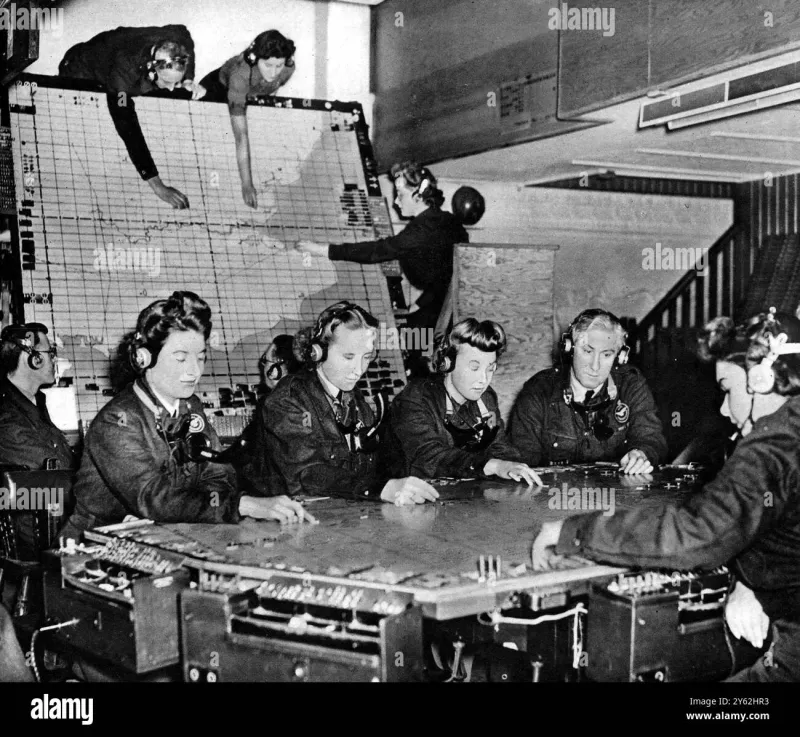
The documentary trail for 92 Squadron — operational record books, correspondence held in squadron archives, and the recollections preserved by veterans' associations — paints a picture far removed from either screen version. It is a story of routine punctuated by terror, of ground crews and WAAF personnel as essential as the pilots, and of a squadron culture in which the card motif was a badge of identity rather than a licence for recklessness.
Enthusiasts who attend restoration hangars and heritage airfields across Kent and Lincolnshire often make the same observation: the real story is stranger and more moving than anything the dramatists produced. A squadron that played for the Ace of Spades on its aircraft while losing friends monthly needs no invented villainy to hold an audience.
Why the Screen Versions Still Matter
It would be easy to dismiss film and television as unreliable narrators and leave it at that. But the screen versions matter, not least because they bring new visitors to heritage sites, museums and preserved airfields every year. Someone who first encounters Fighter Command through a Sunday evening drama may, a few searches later, find themselves reading the operational record of a squadron like 92 — and discovering that the truth has more texture than the fiction.
The task for heritage writing, then, is not to scold the screen but to supplement it. The dramatists gave audiences the noise of war; the archives give us the quiet between the sorties. Both have their place — provided we always know which one we are watching.
For those wishing to see the documented record for themselves, squadron artefacts and interpretive displays can be found at heritage sites across the south-east, and our own guide to Britain's 92 Squadron locations offers a route through the places where the real story was flown.