Grey Skies Over Biggin Hill: The Meteorological Foe That Kept 92 Squadron Grounded
The Enemy That Filed No Flight Plans
For every heart-stopping account of a dogfight over Kent, there were dozens of mornings when the most formidable opponent 92 Squadron faced was a bank of cloud sitting stubbornly at eight hundred feet. The Squadron's operational record books, read alongside the meteorological station logs preserved from Biggin Hill and its Lincolnshire interlude, tell a story that rarely features in the popular imagination: a war fought as much against fog, frost and wind as against the enemy.
Between the summer of 1940 and the Squadron's move to continental operations, weather-related standing-downs outnumbered days lost to enemy action by a considerable margin. It is an arithmetic that reshapes how we might understand the Gambler Boys' war.
Reading the Station Logs
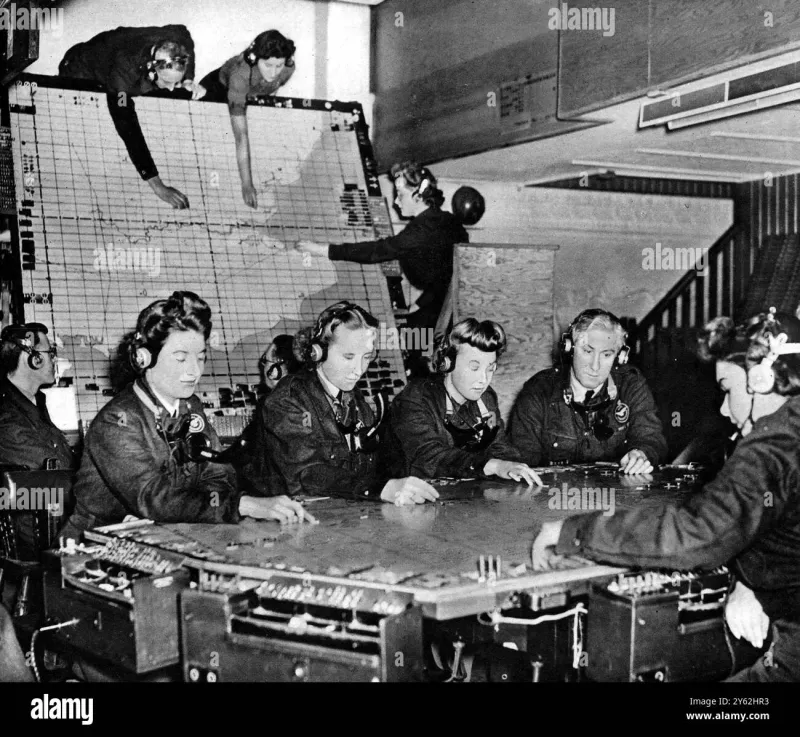
The meteorological office at a fighter station was no backwater posting. Its staff took readings at fixed intervals through the night — barometric pressure, cloud base, wind direction, visibility — because the first question asked at every dawn briefing was brutally simple: could the Squadron fly, and if so, where?
The Biggin Hill logs from the autumn of 1940 make for humbling reading. October of that year saw extended periods when the cloud base never rose above six hundred feet, and drizzle reduced visibility to a matter of hundreds of yards. On such days, the Sector Controller had no choice but to hold squadrons at readiness while German formations crossed the Channel with near-impunity above the murk. The pilots could hear the sirens. They could do nothing.
Frozen Guns and Waterlogged Airfields
Weather's interference went beyond keeping aircraft on the ground. The winter of 1940–41, which the Squadron spent largely in the north, brought conditions that grounded Spitfires in ways the Luftwaffe never managed. Gun heaters were primitive; condensation in the ammunition bays froze at altitude, jamming the Brownings at the very moment they were needed. Ground crews worked through the small hours with rags and warm oil, coaxing the guns free before the first patrol.
Lincolnshire's flat, damp airfields presented their own trials. Waterlogged grass strips turned dispersals into quagmires, and ground transport between huts and aircraft became an ordeal in itself. The logs note days when the wind alone — gusting across the wolds — made landing a Spitfire a genuinely hazardous proposition, claiming more aircraft than enemy fire in certain weeks.
The Gambler's Patience
There is a fitting irony in this for a squadron whose identity was bound up with cards and chance. The Gambler Boys understood, perhaps better than most, that the game was governed by forces beyond any player's control. A pilot could not bluff the weather. He could only wait, and read the sky as one might read an opponent's hand.
Veterans' letters and diaries held in squadron archives return to this theme with striking regularity. The tedium of a grounded week, the restlessness of men trained for combat and denied it by a grey ceiling — these were the true texture of service life. One pilot, writing to his family in November 1940, observed that he had flown twice in a fortnight and spent the remainder 'losing arguments with the English climate'.
Why It Matters Today
For a modern British audience, there is something quietly relatable in all of this. Anyone who has watched a departure board dissolve into a wall of cancellations during a fog event knows precisely what those pilots felt: the peculiar frustration of modern machinery defeated by something as ordinary as mist.
To study 92 Squadron's meteorological record is to honour the full shape of its service — not merely the combat, but the waiting, the maintenance, the patience. The Squadron's story is one of airmen and ground crews who mastered their trade and then submitted, day after day, to the verdict of a weather vane. In that submission lies its own quiet heroism, and a reminder that in the Battle of Britain, the skies over Kent were contested by three parties: the RAF, the Luftwaffe, and the weather itself.