A Name on the Fuselage, a Lie on the Airwaves: The Hidden Art of RAF Deception
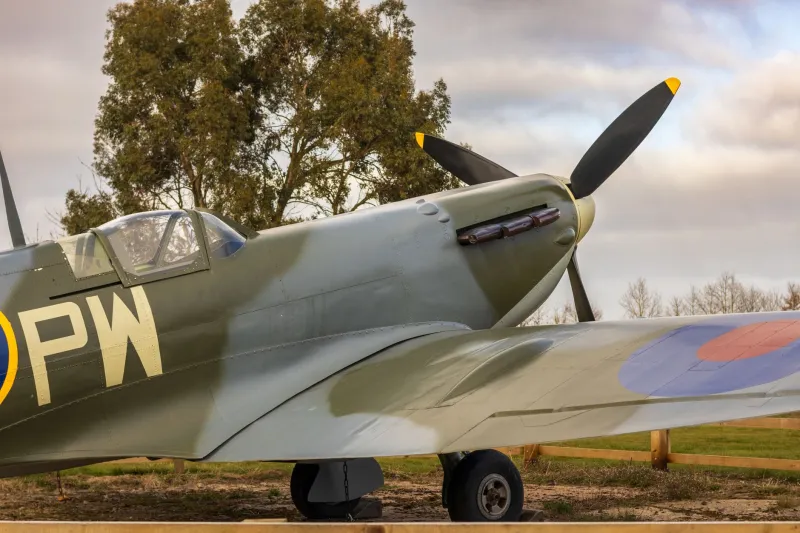
To the visiting public at Biggin Hill in the autumn of 1940, the code letters painted on a Spitfire's fuselage said everything: squadron, section, aircraft. In truth, they said very little at all — or, more accurately, they said only what the Air Ministry wished the enemy to believe.
The story of 92 Squadron is usually told through the boldness of its pilots and the card-table swagger that earned them their enduring nickname. Yet alongside the visible war of combat reports and victory claims ran an invisible one, fought with two-letter codes, shifting wireless frequencies and a steady drip of calculated falsehood. It is a side of squadron life that rarely appears in the memoirs, and one that deserves closer attention.
Why the Letters Mattered
Every RAF squadron carried a two-letter identification code, painted ahead of the roundel and individual aircraft letter. To a German listening post on the Pas-de-Calais, these codes were gold dust. Coupled with intercepted radio traffic, they allowed the Abwehr and the Luftwaffe's signals intelligence units to build a picture of which squadrons sat where, how strong they were, and how quickly they turned formations around after a mauling.
The RAF understood this early. Identification codes were therefore treated as sensitive material, changed periodically, and occasionally altered outright to mislead. A squadron withdrawn to reform might have its code retired with it; a fresh unit might inherit markings that suggested continuity where none existed. The aircraft a German pilot saw overhead was, in the intelligence sense, only as honest as the paint shop made it.
Callsigns, Frequencies and Careful Noise
Radio discipline was the second pillar. Squadrons operated on assigned frequencies with their own callsigns, and these were rotated on strict schedules. Listening stations along the Channel coast transcribed everything they could hear — the clipped R/T chatter of a scramble, the flatness of a controller's vector instructions. From such fragments, an enemy analyst could estimate readiness states and even morale.
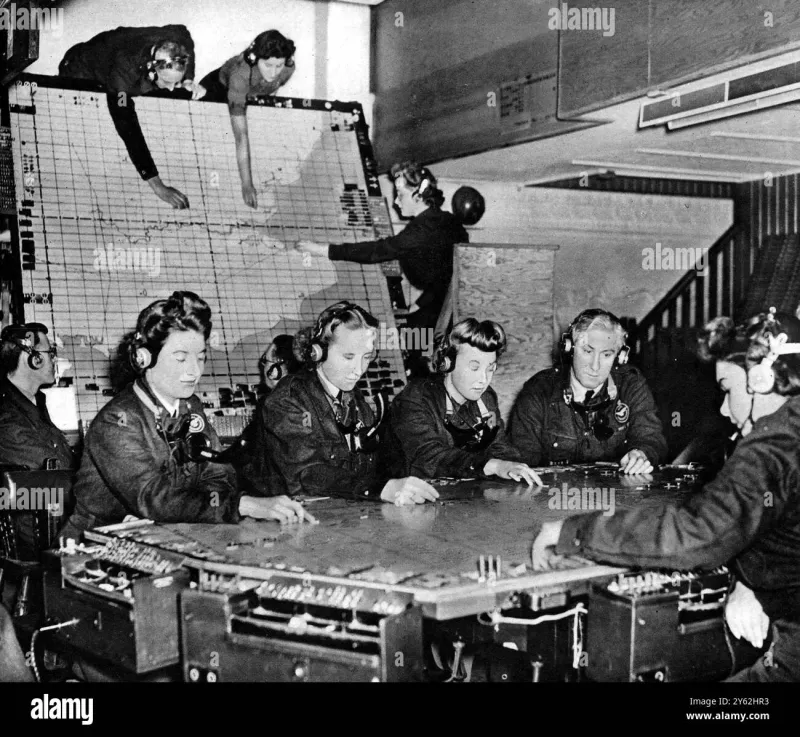
The RAF's counter was twofold. First, rigid wireless silence wherever possible, with ground-based plotting and vectoring doing the work that chatter could not. Second, deliberate noise: dummy traffic, simulated scrambles and exercises flown to mimic operational patterns. The aim was not merely to hide the truth but to bury the enemy analyst in plausible falsehoods — a task at which, by most post-war assessments, British signals organisations considerably outperformed their German counterparts.
What This Meant for a Squadron Like 92
For the men of 92, much of this was invisible. A pilot in September 1940 knew his callsign, his frequency and little more; the machinery of deception sat above him at Group and Command level. But its effects were felt. Squadrons that appeared on paper to be broken were often rebuilt quietly while their codes carried on as before, encouraging the enemy to underestimate the strength he would meet over Kent the following morning.
Post-war German records bear this out. Luftwaffe intelligence summaries of the Battle of Britain period consistently overestimated RAF losses and underestimated the number of squadrons available — a failure owed in large part to the resilience of the British code-and-callsign system and the disciplined way in which it was administered. Where the Germans sought certainty in the letters on a fuselage, they found only what the RAF had chosen to write there.
The Wider Intelligence War
Deception at squadron level sat within a much larger edifice. The Y-Service's listening stations, the codebreakers at Bletchley Park and the planners who orchestrated double-cross operations all depended on the same principle: control what the enemy knows, and you shape what he does. The humble squadron code was the smallest gear in that machine, but a machine is only as sound as its smallest gear.
There was, too, a cultural dimension. A service that prized administrative precision — the same habits of record-keeping that make squadron operations books so valuable to historians today — was well placed to run a deception campaign that required flawless consistency. A false code maintained sloppily is worse than no deception at all.
Reading the Record Today
For the heritage visitor, this hidden war leaves few monuments. There are no plaques to a well-kept secret, and the code letters that once misled German analysts now survive chiefly in photographs, operations records and the paint schemes of restored Spitfires. Yet they form part of the story every bit as much as the combat reports do.
When next you stand before a restored Mark I or II wearing its squadron letters, it is worth pausing on them. They are not merely decoration, nor simply a means of telling one aircraft from another. They are the residue of a quiet, patient contest of wits — one in which squadrons like 92 played their part simply by being seen, correctly marked and deliberately unremarkable, while the truth of Britain's air strength remained, to the enemy at least, anyone's guess.