Snowbound at Biggin: The Frozen Week 92 Squadron Nearly Ate Nothing at Christmas
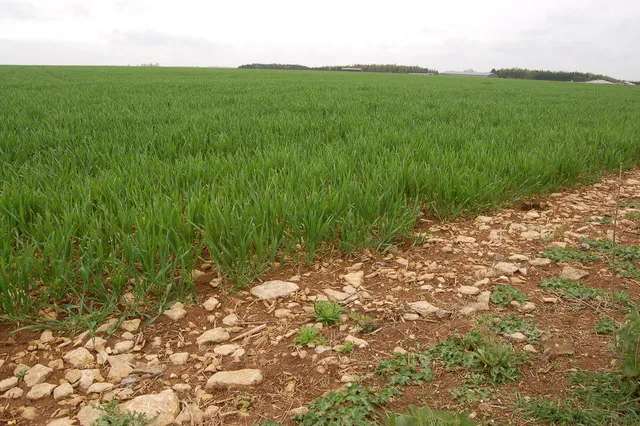
Photo: Roger Davies, CC BY-SA 2.0, via Wikimedia Commons
The Battle of Britain had been over in name since the end of October 1940, but nobody at Biggin Hill that December would have described the war as finished. The airfield still bore the scars of a punishing year — shattered hangars patched with corrugated iron, craters graded flat by hand, and a roster thinned by losses that no one at the station had finished grieving. Then the weather arrived to compound everything.
The winter of 1940 was among the harshest of the century. Snow fell across Kent in the second week of December and, more damagingly, rain froze as it fell. By the 21st, the narrow lanes linking Biggin Hill village to the surrounding market towns had become sheets of glass. Milk lorries turned back at Cudham. The bakery van from Westerham never appeared. And for the men of 92 Squadron — the celebrated 'Gambler Boys', newly blooded by a battle that had tested their endurance to its limits — the prospect of a Christmas dinner at all began to look uncertain.
A Station Cut Adrift
It is easy, from the comfort of the present, to underestimate how fragile the supply arrangements of a wartime aerodrome were. Biggin Hill was not fed by a dedicated supply chain; it depended on exactly the same local tradesmen as everyone else in the district — the butcher from Orpington, the greengrocer who ran his rounds across the chalk hills, the milk that came up twice daily from farms along the Bromley road. When those lanes froze, the station felt it within a day.
Station records from the period are sparse on the matter — mess accounts rarely make for thrilling reading — but the recollections gathered decades later from veterans and local families are consistent. Rations ran low. The airmen's mess stretched what it had: bread fried in dripping, tinned soup watered further than the cook would have liked, and the dregs of the tea ration eked out with dried milk. One pilot's letter home, written in the days before Christmas, joked grimly that the enemy had failed to starve them out but the weather might manage it yet.
The war, of course, did not pause for snow. The Luftwaffe's winter tip-and-run raids continued, and the squadron's duty roster barely slackened. Men who were scrambling for their Spitfires at dawn were, by evening, pushing lorries up the Bromley hill in freezing fog. The ground crews — whose contribution to 1940 has only recently been given its full weight — worked on aircraft in the open, their hands raw, their thermoses of tea frozen solid by mid-morning.
The Farmers' Convoy
What happened next belongs less to the RAF than to Kent itself. Farmers from the surrounding parishes, several of whom had sons serving in uniform and one of whom had already lost a boy over France, organised what locals later remembered as a 'convoy' — a loose, unofficial stream of horse-drawn carts and a handful of ancient tractors fitted with chains on their rear wheels. Horses, unlike lorries, could keep their footing on ice, and the lanes that defeated a three-ton Bedford were passable to a farm cart and a patient carthorse.
Over the course of two days, that improvised supply line brought up what the station could not have managed alone: sides of pork and beef, sacks of potatoes and sprouts, crates of eggs, a barrel of beer from a Westerham brewer, and — according to the most frequently repeated version of the story — a quantity of plucked turkeys and geese that the farmers had declined payment for. The station padre was said to have been dispatched to offer thanks in person, and the quartermaster's ledger records, in the dry language of such documents, a 'credit adjustment' that suggests the accounting office quietly gave up trying to itemise the generosity.
The WAAF played their part with equal resourcefulness. Women drivers attached to the station volunteered for the runs down to Bromley and Hayes in station vehicles fitted with whatever grip could be improvised — old chains, sand bags in the boot, in one account a sacking wrapped round the tyres. Others spent the 23rd and 24th in the station kitchens, peeling vegetables in quantities that defied the rations, while the station's own airmen were detailed to decorate the mess with holly cut from the woods along the main road.
Christmas Day, 1940
The dinner itself, when it came, was remembered by the men who ate it for the rest of their lives — not because it was lavish, though by the standards of that December it was, but because of what it represented. Officers served the other ranks, as tradition required; the station commander carved at the head of the line; and the farmers and their families, invited across in numbers, sat among the men they had fed. A few of the squadron's cards were dealt at a corner table after the meal, as the 'Gambler' legend demanded, but veterans recalled that the games were subdued that year. Too many chairs stood empty. Too many names had been read out over the wireless in the months before.
There was, in the nature of things, no press coverage. The winter airlift at Biggin Hill was never filmed, never reported, and never entered the official narrative of the Battle of Britain — a campaign that had, by Christmas 1940, already acquired its mythology. It was a small act of communal endurance in a season of them, and it passed unrecorded outside the memories of those who were there.
Why It Matters Now
Heritage work is often accused of dwelling on the spectacular — the aces, the kills, the medals. But the story of that frozen Christmas tells us something the victory tallies cannot. It shows a squadron and a community functioning as a single organism, bound by obligation rather than order. It shows that the 'Gambler Boys' depended utterly on people who would never wear wings: the carter, the cook, the farmer's daughter who drove a supply cart up an icy lane because the alternative was that men defending her skies would go hungry.
For those visiting Biggin Hill today — and the airfield's chapel and museum remain among the most moving heritage sites in the southeast — it is worth pausing at the memorials not only to the pilots who flew, but to the parish around them. The lanes are tarmacced now, the farms largely gone under housing, but the landscape is the same. In late December, when frost still grips the North Downs, it takes very little imagination to picture the carts coming up the hill, and to understand that 92 Squadron's Christmas in 1940 was delivered not by the RAF, but by Kent.