Supper at Seven, Sortie at Dawn: The Village Households That Became 92 Squadron's Second Home
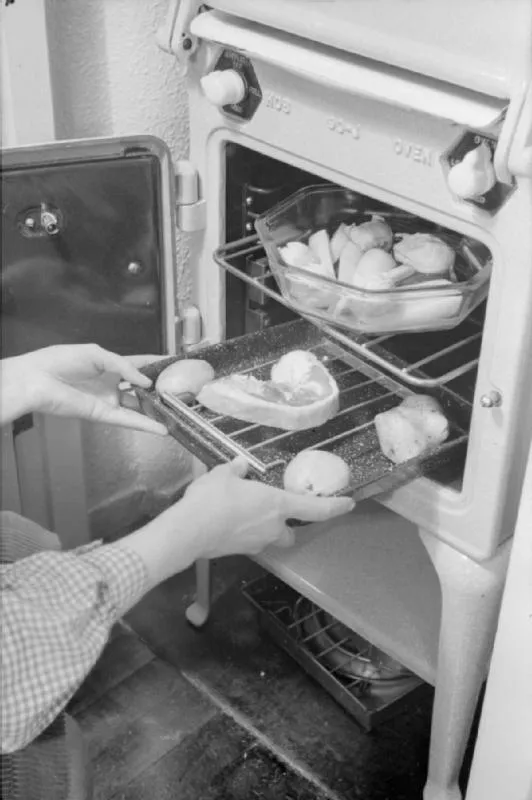
Photo: Ministry of Information Photo Division Photographer, Public domain, via Wikimedia Commons
The history of 92 Squadron is usually told in the language of aviation — sortie rates, victory claims, the crackle of a VHF set above Kent. Yet for the men who flew its Spitfires, the war was lived largely at ground level: in village parlours, over Aga-heated kitchens and beneath the stiffly starched eiderdowns of spare bedrooms lent by strangers. The billet, humble as it sounds, was where the Squadron's story was quietly stitched into the fabric of rural England.
A Village Becomes a Mess
When 92 Squadron arrived at Biggin Hill during the summer of 1940, the surrounding villages of Kent — Downe, Cudham, Farnborough, the hamlets strung along the North Downs — found themselves absorbed into the war effort overnight. Station accommodation was finite, and the demand for billets extended far beyond the wire. Sergeants in particular were frequently boarded out, lodged with families, in small guest houses, or above the local publican's taproom.
For host households, the arrival of a young airman was a disruption and a blessing in equal measure. Rationing meant every extra mouth mattered, but the Air Ministry paid a billeting allowance, and the company was often welcome. Children who had been evacuated or sent to the countryside discovered that the tall figure in the blue-grey uniform could be persuaded to demonstrate card tricks at the kitchen table — a small detail that will surprise nobody familiar with the Squadron's famous fondness for gambling.
The Peculiar Contract of the Billet
The relationship between landlady and lodger was governed by unwritten rules more binding than any regulation. Breakfast would appear at an hour dictated by dawn readiness, not domestic convenience. Hot baths were rationed by the inch. In return, the airmen brought the outside world into households that had, in some cases, changed little since the previous century.
Diaries and letters from the period suggest a striking intimacy developed across these arrangements. A sergeant might return from an operational flight to find his washing done, his boots cleaned, and a supper kept warm regardless of the hour. The landlady, in turn, learned to read the young man's face as he came up the garden path — and to know which evenings required silence rather than questions.
This was the quiet burden of hosting men who flew fighters over the Channel. Households that took in 92 Squadron personnel were, in effect, volunteering for the emotional casualties of the Battle of Britain. When a billeted airman failed to return, the family often learned of it through the ordinary absence of a knock at the door rather than through any official telegram.
Loss, Celebration and the Ordinary Days Between
Village records and parish magazines from the period capture both registers of this shared life. There are accounts of impromptu celebrations — a decoration gazetted, a birthday marked with a cake made from hoarded sugar — and accounts of grief handled with the reserved dignity the English countryside has long made its signature. Wreaths appeared in village churchyards for men whose own families lived hundreds of miles away. Some remain there today.
The Squadron's legendary card games found a natural home in these billets. Poker schools ran late in village sitting rooms, pennies and half-crowns changing hands while the wireless murmured the nine o'clock news in the background. Hosts mostly tolerated it; a few joined in. The 'Gambler Boys' identity was not merely a crest on a fuselage — it was a nightly ritual played out on kitchen tables from Lincolnshire to Kent.
What the Billets Left Behind
The heritage of these domestic arrangements is easy to overlook. There are no memorial plaques to landladies, no preserved billet houses marked with heritage blue discs. Yet the social contract they represented — civilians and servicemen bound into temporary households under the shadow of loss — was as essential to 92 Squadron's story as any airframe.
For the heritage visitor today, traces survive in unexpected places: a parish roll of honour listing airmen 'adopted' by the village, a guest house ledger in a county archive, the occasional letter in a family drawer describing 'our sergeant' with an affection that outlasted the war itself. To walk the lanes around Biggin Hill is to walk through what was, for a few extraordinary years, the extended home of the Squadron.
The men of 92 Squadron flew as a unit, but they lived as guests — and the English families who took them in deserve their place in the record. In remembering the Gambler Boys, we should remember the kitchens they sat in, the landladies who worried for them, and the doors left unlatched until the engine noise faded into the dark.