The Wireless in the Parlour: How Britain Listened for News of Biggin Hill
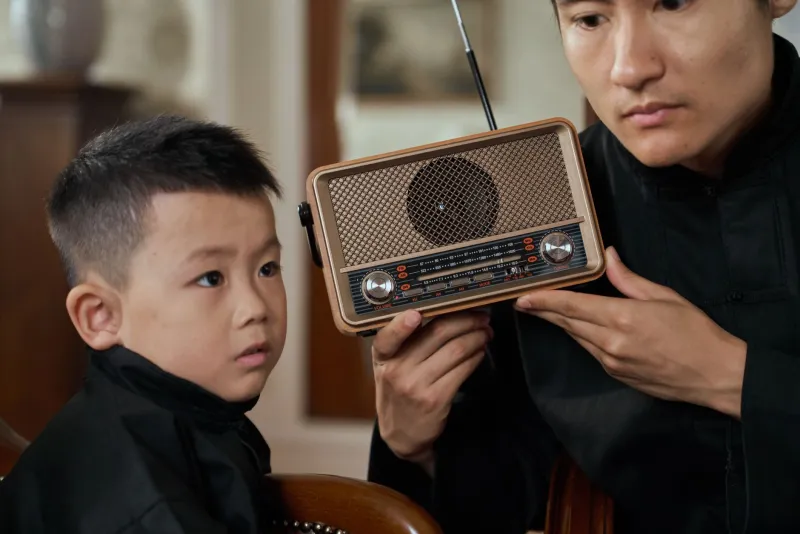
In the corner of a front parlour in Croydon or Cardiff or Carlisle, a walnut-cased wireless set did quiet work of national importance. Each evening through the summer of 1940, the nine o'clock BBC bulletin offered the nation its only sanctioned window onto the air war — and for the families of the Gambler Boys of 92 Squadron, that window was narrow indeed.
The Nine O'Clock Ritual
The BBC Home Service bulletins followed a familiar liturgy: enemy losses given with confidence, British losses described with a studied vagueness. Listeners heard of 'enemy aircraft destroyed' in sweeping totals, but the fate of any particular squadron was almost never named. The Air Ministry's communiqués, read aloud in clipped Received Pronunciation, were exercises in compression — a week of desperate fighting over Kent reduced to two sentences.
For the families of airmen, this created a peculiar arithmetic. If the bulletin claimed nineteen enemy aircraft downed, a listener might reasonably infer British losses of perhaps eight or nine. But which squadrons? Which airfields? Which men? The wireless did not say.
Reading Between the Announcements
Newspapers were little more forthcoming, though the regional press developed its own artful conventions. A short notice in a local paper — 'Pilot Officer X, whose parents live in Leeds, is reported missing from operations' — was often the first confirmation a family received, arriving days before the official telegram.
Yet the public was not entirely passive. Wartime listeners became skilled at parsing the bulletins' silences. When the BBC reported heavy fighting 'over south-east London and Kent' without mention of pilot casualties, households with a son at a fighter station understood that discretion, not good fortune, was at work. The gap between broadcast and truth was not deception so much as policy: the Ministry feared that accurate loss figures, gathered from dozens of transmitters, would hand Reichsmarschall Göring a daily intelligence summary.
What Biggin Hill Knew That Britain Did Not
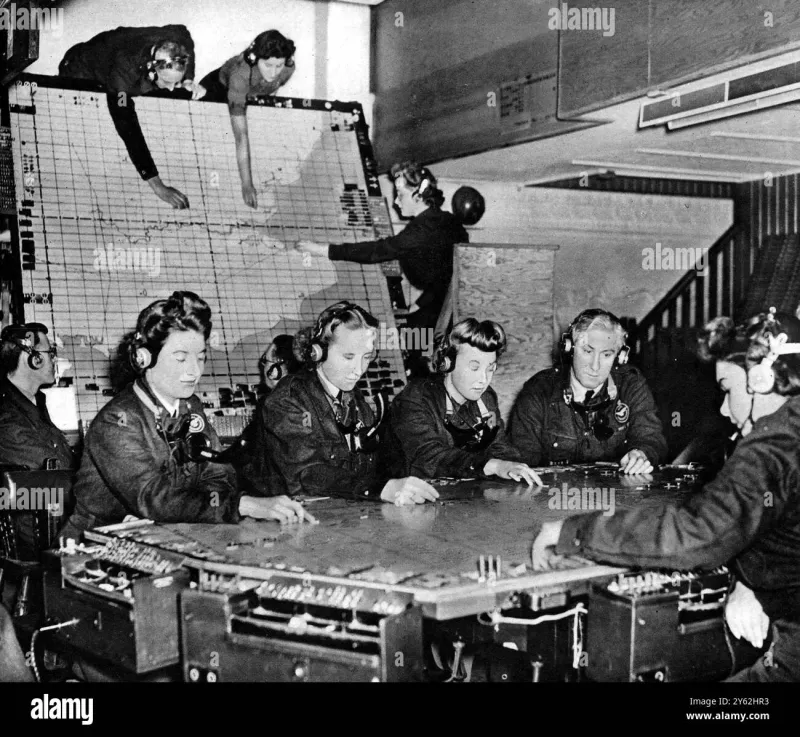
Behind the scenes at Biggin Hill, the discrepancy was stark. While the wireless spoke of victories, the station's own casualty board told another story — names chalked, wiped and chalked again through September. WAAF plotters, ground crews and the pilots themselves lived in an information world the bulletins never approached.
Families who lived near the Kentish airfields enjoyed — or endured — a more immediate broadcast of their own. The sound of Merlins overhead, the sight of squadrons forming up, the terrible quiet of an aircraft that failed to return: these were bulletins of a different kind, and neighbours understood their meaning without a word being spoken.
The Letters That Completed the Picture
Into this information gap stepped the postman. Letters home, passed by the censor's blue pencil, carried what the wireless could not: a mention of 'a rough do yesterday', a request for socks, an oblique reference to a friend 'who won't be writing'. Parents learned to read these letters the way cryptographers read intercepts — for tone, for omission, for the sentence that wasn't written.
Surviving correspondence from 92 Squadron families, held in county record offices and private collections, shows how deliberately men wrote to reassure. A pilot might describe a 'scrape' with a Messerschmitt in cheerful terms, leaving the gravity to be inferred only after the fact.
Listening On
Today, with the BBC Genome project digitising the Radio Times listings and broadcast archives increasingly accessible, we can reconstruct exactly what the wartime listener heard — and, more tellingly, what they didn't. The schedules show repeats of dance-band programmes and comedy revues scheduled deliberately alongside the news, a programme of morale by design.
The wireless set in the parlour could not tell a mother in Yorkshire whether her son had flown that day. It could only tell her that Britain still fought. For millions of families, that had to be enough — and in understanding the limits of what was broadcast, we understand better the private anxieties carried by those who loved the men of 92 Squadron. Their war was fought in front of a dial, waiting for the bulletin to end and the silence to begin.