Beneath the Grass at Biggin: Reading the Ruins of 92 Squadron's Dispersals
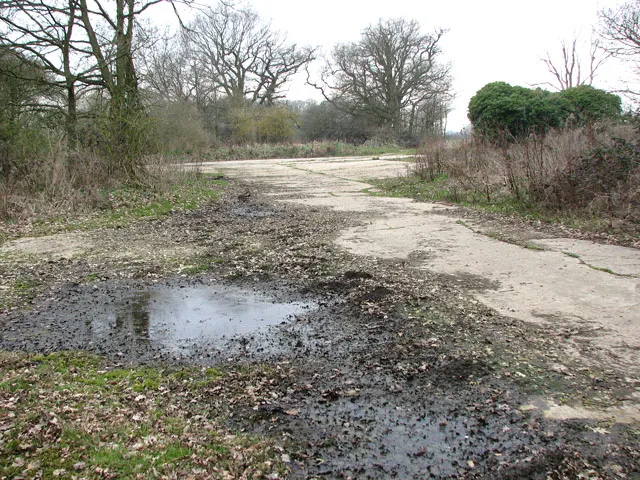
Photo: Evelyn Simak, CC BY-SA 2.0, via Wikimedia Commons
Stand at the edge of a Kentish field on a damp February morning and you could easily miss it: a rectangle of concrete, cracked and green with lichen, half-swallowed by nettles. Nothing marks it. No plaque, no noticeboard, no queue of visitors. Yet in September 1940, this unremarkable slab was the last piece of England a young pilot of 92 Squadron touched before climbing into a Spitfire at dawn.
The airfields of the Second World War are vanishing. Runways have been quarried, ploughed or paved over for retail parks. But the periphery — the dispersal pans, hut foundations and trackways where squadrons actually lived and worked — survives in fragments at sites across the country, and nowhere more evocatively than at Biggin Hill and Digby, the two stations most closely bound to the Gambler Boys' story.
What Remains, and Why
It helps to understand what you are looking for. A wartime fighter station was not simply a runway. Around the airfield itself lay a constellation of small structures: dispersed blast pens where aircraft were parked clear of one another, to limit damage from a single bomb or strafing attack; crew rooms and dispersal huts where pilots waited on standby, playing cards, drinking tea and watching the sky; and slit trenches, pillboxes and ammunition stores threaded through the hedgerows.
Because these structures were cheap, functional and often intended to be temporary, many were never formally demolished — they were simply abandoned. Concrete, being concrete, has outlasted almost everything else. Brick courses, floor slabs, bolt-down stanchions and drainage gullies can persist for eighty years beneath grass and scrub.
At Biggin Hill, the post-war expansion of the airfield has swept away much of the 1940 landscape, but careful eyes can still pick out remnants along the perimeter and in the surrounding woods — the sites of the station's notorious E-plot and operations buildings, and traces of the dispersed positions where squadrons, including 92, sheltered during the Battle of Britain. At Digby in Lincolnshire, where 92 Squadron formed its identity in the early months of the war, quieter fragments survive in the farmland around the still-active station.
Aerial Archaeology: Finding What the Eye Misses
The most powerful tool available to the modern enthusiast costs nothing. Historic aerial photograph collections — notably the collections held by Historic England and the National Collection of Aerial Photography — allow anyone to compare wartime and post-war imagery with present-day satellite views.
Look for the tell-tale signatures: pale rectangular parch-marks in grass during dry summers; straight-edged shadows where a hut floor slab sits a few inches proud of the surrounding field; the subtle geometric regularity that nature never produces on its own. Crop marks in aerial survey photographs frequently reveal runway perimeters and taxiway edges long after the ground level has been ploughed flat.
Cross-reference these with the wartime airfield plans held at The National Archives at Kew. Station drawing sets mark dispersal positions, hut lines and road layouts with often surprising precision. Overlaying a 1940 plan on a modern Ordnance Survey map — many enthusiasts use free GIS tools for exactly this — transforms a walk in the countryside into a form of detective work.
Walking the Ground: Rights and Responsibilities
Here the heritage rambler must tread carefully, in every sense. Much of what survives lies on private farmland, on working airfields or on land with Ministry of Defence connections. The law is straightforward: there is no right to wander onto private land in England, and active airfields are, quite properly, strictly out of bounds.
The correct approach is always the same. Identify the landowner and ask. In practice, farmers with wartime sites on their land are frequently fascinated by the interest and often possess family stories of their own. Local history societies — Kent and Lincolnshire are both well served — can broker introductions and sometimes organise accompanied visits.
Once on site, a strict code applies:
- Observe, never excavate. Metal detecting and digging on wartime sites without permission and, in many cases, a licence, is illegal under treasure and heritage law, and destroys stratigraphy that archaeologists may one day wish to study.
- Leave artefacts in situ. A rusted fuel drum or a shard of crockery is evidence in context. Moved, it is junk.
- Close gates, avoid crops, keep dogs at home. The ordinary courtesies of the English countryside apply doubly on historic ground.
- Record, don't remove. Photographs, sketches and grid references contributed to the Historic Environment Records held by county councils add genuinely useful data.
Why the Concrete Matters
There is a school of thought that holds only medals, logbooks and museum aircraft constitute heritage. Spend an hour standing on a weathered dispersal pan, however, and the argument dissolves. These are the places where the war was actually endured — the long waits, the scramble klaxons, the tea urns and the card games that gave 92 Squadron its enduring nickname. Buildings hold memory differently than objects do.
What remains is fragile. Every hard winter cracks another slab; every ploughing erases another footprint. The pilots of the Gambler Boys gambled against odds they could not control. The least we can do, walking the ground they flew from, is ensure the odds do not fall entirely against the concrete.
If you visit, go quietly, ask first, and leave nothing but footprints — the same footprints, in their way, that the ground has been holding for eighty years.